Sometimes figuring out which law bans discrimination based on race can feel a little tricky. Many laws touch on fairness, and it’s easy to get them mixed up, especially when you’re just starting to learn. But don’t worry!
We’re going to break it down super simply. We’ll show you exactly which law is the main one for stopping race discrimination. Get ready for a clear, easy step-by-step look at this important topic.
Key Takeaways
- The Civil Rights Act of 1964 is the primary federal law that prohibits discrimination based on race.
- This landmark law covers many areas of life, including employment, education, and public accommodations.
- Understanding the Civil Rights Act helps you know your rights and how to address unfair treatment.
- Several other laws build upon or support the principles of racial equality established by the 1964 Act.
- The impact of this law continues to shape society and protect individuals from racial bias.
Understanding Which Law Bans Discrimination Based on Race
When people ask which law bans discrimination based on race, they are usually looking for the cornerstone legislation that brought about significant federal protection against racial prejudice. For many, the complexity of legal statutes can be overwhelming, leading to confusion about which law provides the most comprehensive protection. This question is common because historical progress in civil rights involved numerous legal battles and legislative efforts, and pinpointing the central piece of legislation is key to grasping the broader picture of anti-discrimination law.
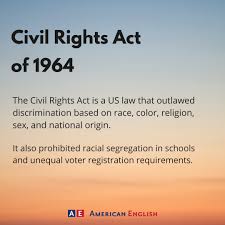
The answer to which law bans discrimination based on race at the federal level is primarily the Civil Rights Act of 1964. This monumental piece of legislation was enacted to prohibit discrimination on the basis of race, color, religion, sex, or national origin. It applies to various aspects of public life, including employment, education, and access to public facilities.
Its passage was a pivotal moment in American history, marking a significant step forward in the fight for equality and justice for all citizens.
The Significance of the Civil Rights Act of 1964
The Civil Rights Act of 1964 stands as one of the most important pieces of legislation in U.S. history. It was not just one law but a comprehensive package of rules aimed at dismantling segregation and ending discriminatory practices that had been ingrained in American society for centuries.
Before this act, racial discrimination was widespread and often legally sanctioned in many parts of the country. This act changed that by creating federal power to enforce equal rights.
This law was the result of years of activism and advocacy by the Civil Rights Movement. Leaders like Martin Luther King Jr., Rosa Parks, and many others fought tirelessly to bring attention to the injustices faced by African Americans and other minority groups. Their courage and dedication paved the way for the political will necessary to pass such a transformative law.
The act addressed various forms of discrimination, aiming to create a more just and equitable society for everyone.
The impact of the Civil Rights Act of 1964 extended far beyond just stating that discrimination was wrong. It provided concrete mechanisms for enforcement, allowing individuals who experienced discrimination to seek legal remedies. This was a radical departure from previous policies, where victims often had little recourse.
The law’s broad scope meant it could tackle discrimination in areas where it was most pervasive and damaging.
Employment Discrimination
Title VII of the Civil Rights Act of 1964 is perhaps its most well-known component. It specifically addresses discrimination in employment. This means employers cannot refuse to hire, fire, or otherwise discriminate against any individual because of their race, color, religion, sex, or national origin.
This protection applies to nearly all aspects of the employment relationship, from hiring and firing to promotions, pay, and other terms and conditions of employment.
Before Title VII, it was common for employers to have hiring practices that openly favored certain racial groups over others. This led to significant economic disparities and limited opportunities for many Americans. Title VII made such practices illegal, forcing businesses to adopt more merit-based and fair hiring and promotion systems.
The Equal Employment Opportunity Commission (EEOC) was established to enforce this part of the law, investigating complaints and mediating disputes.
The effects of Title VII have been profound. It has helped to open doors for countless individuals who were previously shut out of certain professions due to their race. While challenges remain, the legal framework established by Title VII provides a critical tool for fighting workplace discrimination and promoting diversity and inclusion in the American workforce.
It ensures that employment opportunities are based on qualifications and not on prejudice.
Public Accommodations and Discrimination
Another critical part of the Civil Rights Act of 1964 is Title II, which prohibits discrimination in places of public accommodation. This includes businesses that serve the public, such as restaurants, hotels, theaters, and retail stores. These establishments are required to serve all customers without regard to race, color, religion, or national origin.
This title was instrumental in dismantling the “Jim Crow” laws that enforced segregation in public spaces across the South.
Before Title II, many businesses openly refused service to people of color, forcing them to use separate and often inferior facilities. This was a daily humiliation and a stark reminder of racial inequality. The passage of Title II meant that a person could not be denied service simply because of their race when entering a restaurant or checking into a hotel.
It was a direct attack on the infrastructure of segregation.
The practical impact of Title II was immediate and visible. It helped to integrate public spaces and create a more welcoming environment for all Americans. This section of the law is a powerful example of how federal legislation can directly change social norms and practices.
It affirmed the principle that all individuals, regardless of race, deserve equal access to public services and amenities.
Other Important Anti-Discrimination Laws
While the Civil Rights Act of 1964 is the primary law addressing discrimination based on race, it is not the only legal protection available. Several other federal laws, as well as state and local laws, have been enacted over the years to further protect individuals from discrimination and to reinforce the principles of equality. These laws often build upon the foundation laid by the 1964 Act.
These additional laws often provide specific protections in areas not fully covered by the 1964 Act or offer enhanced remedies for victims of discrimination. They work together to create a more comprehensive system of legal protections against unfair treatment. Understanding these related laws helps to paint a fuller picture of the legal landscape that combats racial discrimination in the United States.
The Fair Housing Act
The Fair Housing Act, enacted in 1968 as part of the Civil Rights Act of 1968, prohibits discrimination concerning the sale, rental, and financing of housing based on race, religion, national origin, and sex. This law is crucial because housing is a fundamental need, and discrimination in this area can have long-lasting effects on individuals and communities, impacting access to education, employment, and public services.
Before the Fair Housing Act, discriminatory practices like redlining and restrictive covenants were common, systematically denying people of color the opportunity to live in certain neighborhoods. This led to segregated communities and contributed to wealth gaps that persist today. The act made it illegal for landlords, sellers, and lenders to discriminate based on protected characteristics, aiming to create more integrated and equitable communities.
The Fair Housing Act is enforced by the Department of Housing and Urban Development (HUD) and the Department of Justice. It allows individuals who believe they have been discriminated against to file complaints. This law is essential for ensuring that everyone has a fair chance to find safe and affordable housing, free from racial bias.
It is a vital tool in promoting residential equality.
The Equal Credit Opportunity Act
The Equal Credit Opportunity Act (ECOA), passed in 1974, prohibits discrimination in any aspect of a credit transaction. This means creditors cannot discriminate against applicants based on race, color, religion, national origin, sex, marital status, or age. This law is vital because access to credit is essential for major life purchases like homes and cars, and for starting businesses.
Historically, individuals from certain racial or ethnic groups faced significant barriers in obtaining loans or credit cards, even if they had good creditworthiness. This limited their ability to build wealth and achieve financial stability. The ECOA ensures that credit decisions are based on an applicant’s creditworthiness, not on discriminatory factors.
The enforcement of ECOA is handled by various federal agencies, depending on the type of creditor. For example, banks are typically overseen by the Consumer Financial Protection Bureau (CFPB) and the Department of Justice. This act is a critical safeguard against financial discrimination, promoting economic opportunity for all Americans.
Enforcement and Remedies
It’s one thing to have laws on the books, but it’s another to ensure they are followed. The effectiveness of anti-discrimination laws hinges on robust enforcement mechanisms and the availability of meaningful remedies for those who have been wronged. Various government agencies and the court system work together to uphold these laws.
When discrimination occurs, individuals often have recourse through administrative agencies or by filing lawsuits. The goal is not only to punish the discriminatory party but also to make the victim whole, to the extent possible, and to prevent future discrimination. This can include compensation for lost wages, emotional distress, and changes to discriminatory practices.
Government Agencies
Several federal agencies play a key role in enforcing anti-discrimination laws. The Equal Employment Opportunity Commission (EEOC) is primarily responsible for enforcing Title VII of the Civil Rights Act of 1964 and other federal laws prohibiting employment discrimination. The Department of Housing and Urban Development (HUD) enforces the Fair Housing Act.
These agencies investigate complaints filed by individuals who believe they have been subjected to discrimination. They can attempt to resolve disputes through mediation or conciliation. If a resolution cannot be reached, the agency may file a lawsuit against the discriminatory party or issue a “right-to-sue” letter, allowing the individual to pursue their case in court.
The U.S. Department of Justice also plays a significant role, particularly in pattern-or-practice cases of discrimination and in enforcing civil rights laws related to voting, housing, and public accommodations. These agencies act as gatekeepers, ensuring that claims are properly investigated and that legal action is taken where necessary.
Legal Recourse for Victims
If administrative remedies are unsuccessful or if an individual chooses to pursue legal action directly, they can file a lawsuit in federal or state court. The courts have the authority to award various remedies to victims of discrimination. These remedies are designed to compensate for harm suffered and to deter future discrimination.
Common remedies include back pay to compensate for lost wages, front pay for future lost earnings, compensatory damages for emotional pain and suffering, and punitive damages designed to punish the wrongdoer and deter similar conduct by others. In some cases, courts may also order injunctive relief, requiring the defendant to change their discriminatory practices or policies.
The legal process can be lengthy and complex, but it provides a vital avenue for justice for those who have experienced racial discrimination. The ability to seek legal redress is a cornerstone of anti-discrimination law, empowering individuals to stand up against injustice.
Common Myths Debunked
Myth 1: The Civil Rights Act of 1964 only applies to the Southern United States.
Reality: While the Civil Rights Act of 1964 was largely a response to the deeply entrenched segregationist practices in the Southern states, its provisions apply nationwide. The law’s protections extend to all states and territories of the United States, ensuring that its anti-discrimination mandate is uniformly applied across the country. Its impact was revolutionary everywhere, not just in specific regions.
Myth 2: The Civil Rights Act of 1964 was the first law to ban racial discrimination.
Reality: While the Civil Rights Act of 1964 is the most comprehensive and impactful law banning discrimination based on race, earlier laws did address some aspects of racial equality. For instance, the 13th Amendment abolished slavery, and the 14th Amendment granted citizenship and equal protection under the law. However, these earlier measures often lacked strong enforcement mechanisms, and de facto segregation and discrimination persisted widely until the 1964 Act provided federal teeth.
Myth 3: Once a law bans discrimination, it’s completely gone.
Reality: Laws are powerful tools, but they cannot instantly erase deeply ingrained societal biases or prejudices. While the Civil Rights Act of 1964 made racial discrimination illegal, its enforcement is ongoing, and challenges still exist. Discrimination can manifest in subtle ways, and legal battles continue to ensure that the spirit and letter of the law are upheld in practice.
Continuous vigilance and effort are needed to achieve true equality.
Myth 4: Only African Americans are protected by laws banning racial discrimination.
Reality: The primary laws banning discrimination based on race, such as the Civil Rights Act of 1964 and the Fair Housing Act, protect all individuals from discrimination on the basis of their race or color. This includes people of any racial or ethnic background, such as Hispanic Americans, Asian Americans, Native Americans, and white Americans, if they are subjected to discrimination because of their race.
Frequently Asked Questions
Question: What is the main law that prohibits discrimination based on race in the workplace?
Answer: Title VII of the Civil Rights Act of 1964 is the primary federal law that prohibits employment discrimination based on race, color, religion, sex, or national origin.
Question: Does the Civil Rights Act of 1964 cover discrimination in schools?
Answer: Yes, Title VI of the Civil Rights Act of 1964 prohibits discrimination on the basis of race, color, or national origin in programs and activities that receive federal financial assistance, which includes most public schools.
Question: Can I sue someone for racial discrimination?
Answer: Yes, if you believe you have been discriminated against based on your race, you generally have the right to file a complaint with a government agency like the EEOC or HUD, or you can file a lawsuit in court.
Question: Are there any laws that protect against discrimination in housing based on race?
Answer: Yes, the Fair Housing Act makes it illegal to discriminate in the sale, rental, and financing of housing based on race, color, religion, sex, or national origin.
Question: What is the role of the Equal Employment Opportunity Commission (EEOC)?
Answer: The EEOC is the federal agency responsible for enforcing federal laws that make it illegal to discriminate against a job applicant or an employee because of the applicant or employee’s race, color, religion, sex, national origin, age, disability or genetic information.
Wrap Up
The Civil Rights Act of 1964 is the fundamental law that bans discrimination based on race. It covers jobs, public places, and more. This law ensures everyone gets fair treatment regardless of their race.
Knowing this law empowers you and helps build a more just society. Use this knowledge to stand up for equality.